SafeEdge - Health & Safety

Stop managing safety with spreadsheets and paper trails. Our all-in-one EHS platform helps you protect your workforce, automate compliance, and build a culture of safety—from the office to the field.

1. Incident & Hazard Management

  • Incident Reporting: Mobile-friendly forms for capturing accidents, near-misses, and environmental spills in real-time.
  • Root Cause Analysis (RCA): Built-in tools like the "5 Whys," Fishbone (Ishikawa) diagrams, and ICAM methodologies to identify underlying issues.
  • Near-Miss Tracking: Specialized workflows to capture "close calls" before they lead to serious injuries.
  • Hazard Identification: Instant logging of unsafe conditions with photo/video attachments and GPS location tagging.
  • Corrective & Preventive Actions (CAPA): Automatic task assignment to ensure safety gaps are closed, with deadline alerts and escalation workflows.

2. Regulatory & Rule-Based Alerts

  • Maximum Shift Length: Triggers an alert when a worker nears the maximum allowed hours in a single day (e.g., 12 hours).
  • Minimum Rest Period: Alerts supervisors if a worker is scheduled for a shift without the required minimum "off-duty" time (e.g., 10 hours between shifts).
  • Consecutive Days Worked: Notification when a worker reaches a limit of consecutive shifts (e.g., 6 days in a row) without a 24-hour break.
  • Weekly/Fortnightly Hour Caps: Alerts when cumulative hours exceed safety thresholds (e.g., 60 hours in a rolling 7-day period).
  • Break Compliance: Real-time alerts if a mandatory mid-shift break has not been logged within the required timeframe.

3. Bio-Mathematical & Predictive Alerts

  • Fatigue Risk Score (FRS): Automated alerts when a worker’s "Risk Score" (calculated based on sleep history and circadian rhythms) hits a high-danger zone.
  • Circadian Rhythm Alerts: Flags high-risk "Window of Circadian Low" (WOCL) periods, typically between 2:00 AM and 6:00 AM, where the body is most prone to micro-sleeps.
  • Cumulative Fatigue Warning: Alerts based on "sleep debt" over a rolling 72-hour or 7-day period, rather than just the current shift.
  • Task-Risk Correlation: A specialized alert triggered when a "high fatigue" worker is assigned to a "high-risk" task (e.g., operating a crane while in a high-fatigue state).
  • Fatigue Risk Score (FRS): Automated alerts when a worker’s "Risk Score" (calculated based on sleep history and circadian rhythms) hits a high-danger zone.
  • Circadian Rhythm Alerts: Flags high-risk "Window of Circadian Low" (WOCL) periods, typically between 2:00 AM and 6:00 AM, where the body is most prone to micro-sleeps.
  • Cumulative Fatigue Warning: Alerts based on "sleep debt" over a rolling 72-hour or 7-day period, rather than just the current shift.
  • Task-Risk Correlation: A specialized alert triggered when a "high fatigue" worker is assigned to a "high-risk" task (e.g., operating a crane while in a high-fatigue state).

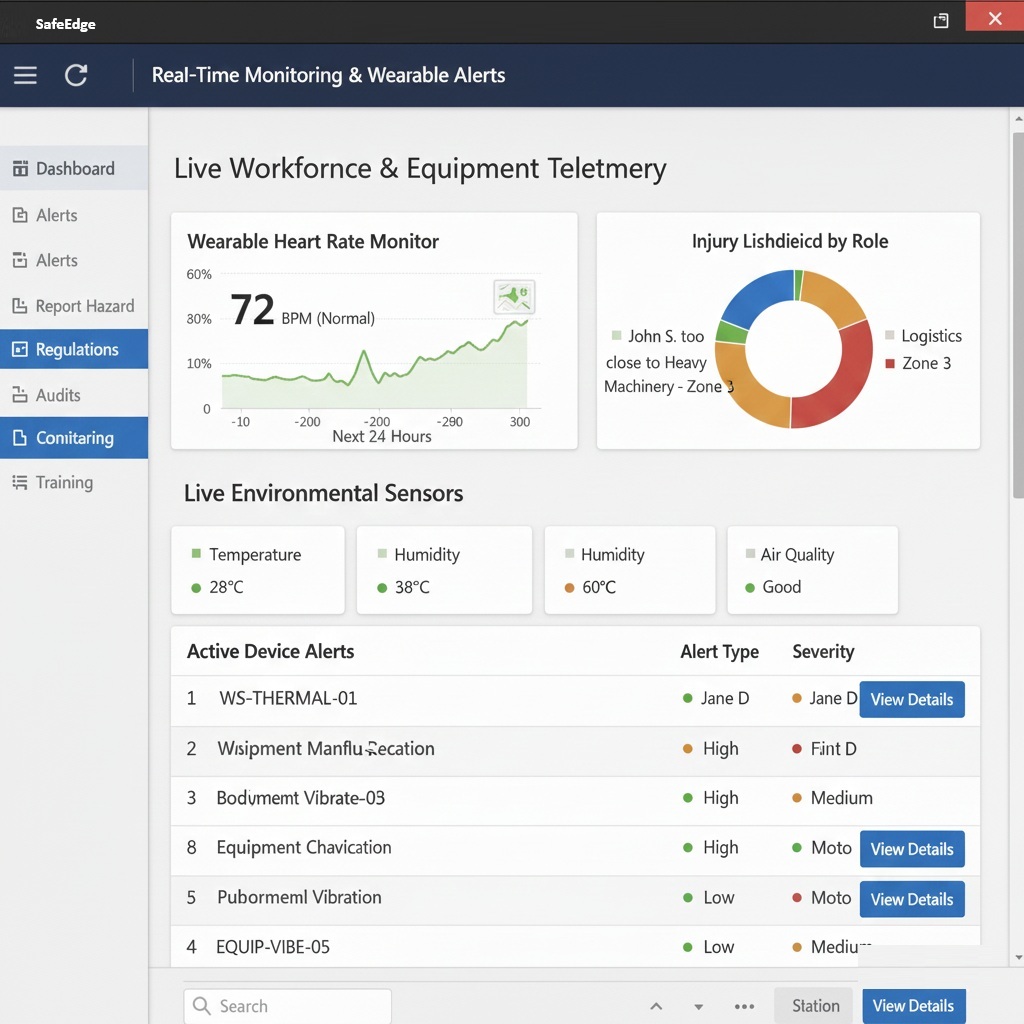
4. Real-Time Monitoring & Wearable Alerts

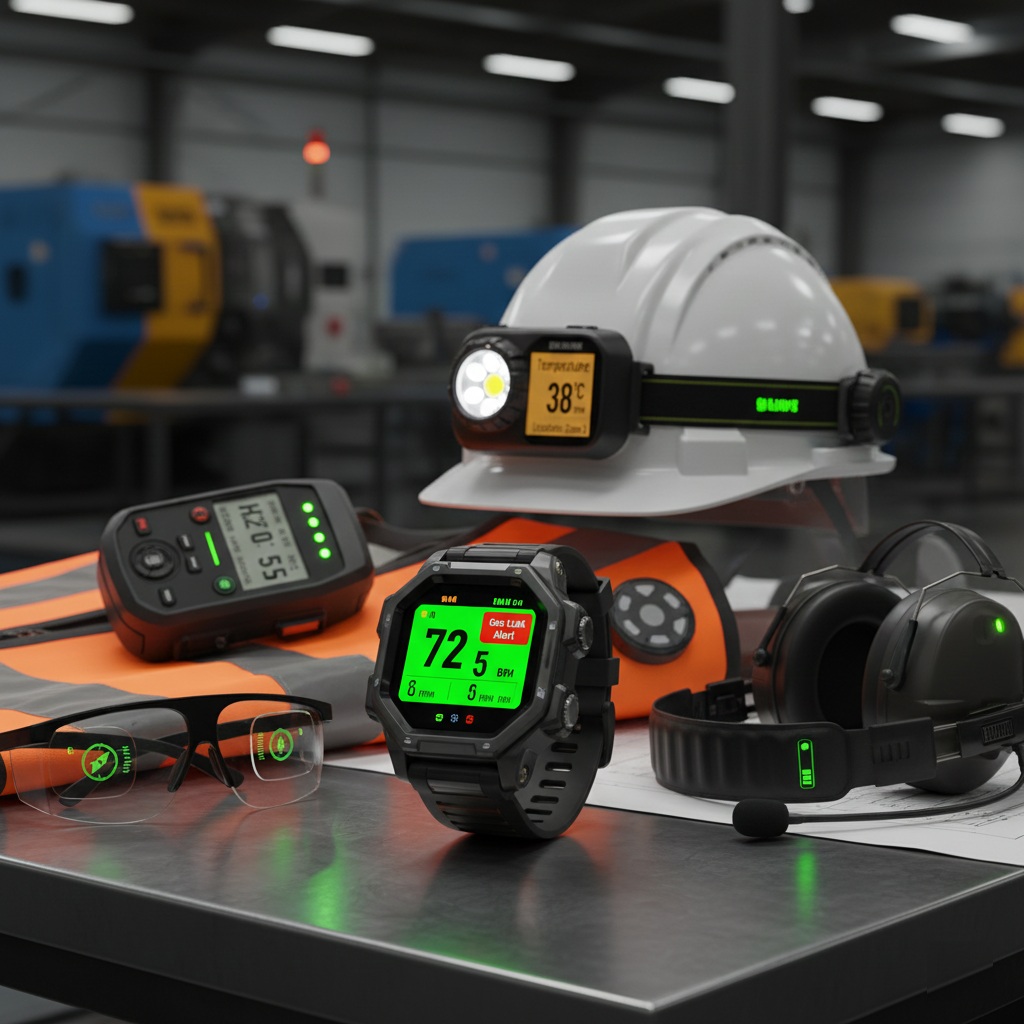
  • Biometric Breach Alerts: Integration with wearables (smartwatches/rings) to alert supervisors if a worker's heart rate variability or skin temp indicates extreme exhaustion.
  • Gamified Alertness Testing: Triggers an alert if a worker fails a 60-second "reaction time" or "cognitive game" app test at the start of their shift.
  • In-Cab Distraction Alerts: For logistics, alerts triggered by AI cameras detecting yawning, closed eyes, or "head nods" (micro-sleeps).
  • Missed Check-in: For lone workers, an alert is sent to dispatch if the worker fails to respond to a scheduled "Are you okay?" prompt.

5. Administrative & Operational Alerts

  • Roster Violation Warnings: Real-time "red-flag" icons on the scheduling dashboard preventing a manager from assigning an exhausted employee to a new shift.
  • Waiver & Override Notifications: Instant alerts to senior management if a supervisor manually overrides a fatigue warning to keep a worker on-site.
  • Commute Time Alerts: For remote sites, alerts that factor in "door-to-door" time, flagging workers whose long commutes significantly reduce their actual rest time.
  • Training Expiry Alerts: Notifications when a worker’s mandatory "Fatigue Awareness Training" is about to expire.

6. Escalation & Communication Features

  • Multi-Channel Delivery: Alerts sent via SMS, Push Notification, Email, and Desktop Pop-up simultaneously for high-risk breaches.
  • Tiered Escalation: If a supervisor doesn't acknowledge a high-risk fatigue alert within 15 minutes, the software automatically escalates the alert to the Safety Director.
  • Corrective Action Prompts: The alert doesn't just say "Worker Fatigued"—it provides a button to "Reassign Task," "Initiate Break," or "Send Home."

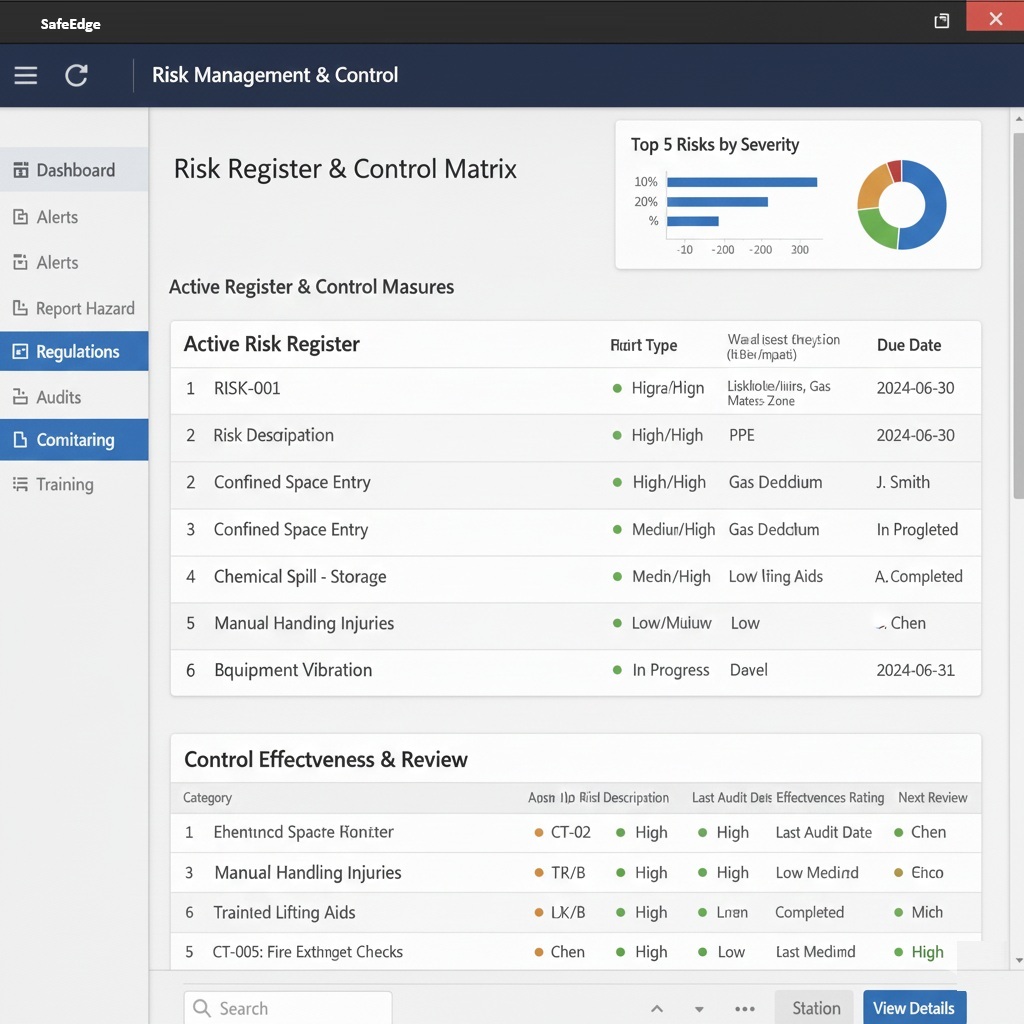
7. Risk Management & Control

  • Risk Assessments: Templates for Job Hazard Analysis (JHA), Job Safety Analysis (JSA), and Point-of-Work Risk Assessments.
  • Risk Matrix: Interactive visual maps to calculate risk levels based on severity and likelihood.
  • Critical Control Management (CCM): Tracking high-risk activities (e.g., working at heights, confined spaces) and verifying that life-saving controls are in place.
  • Permit to Work (PTW): Digital authorization system for high-risk tasks, ensuring all safety requirements are met before work starts.

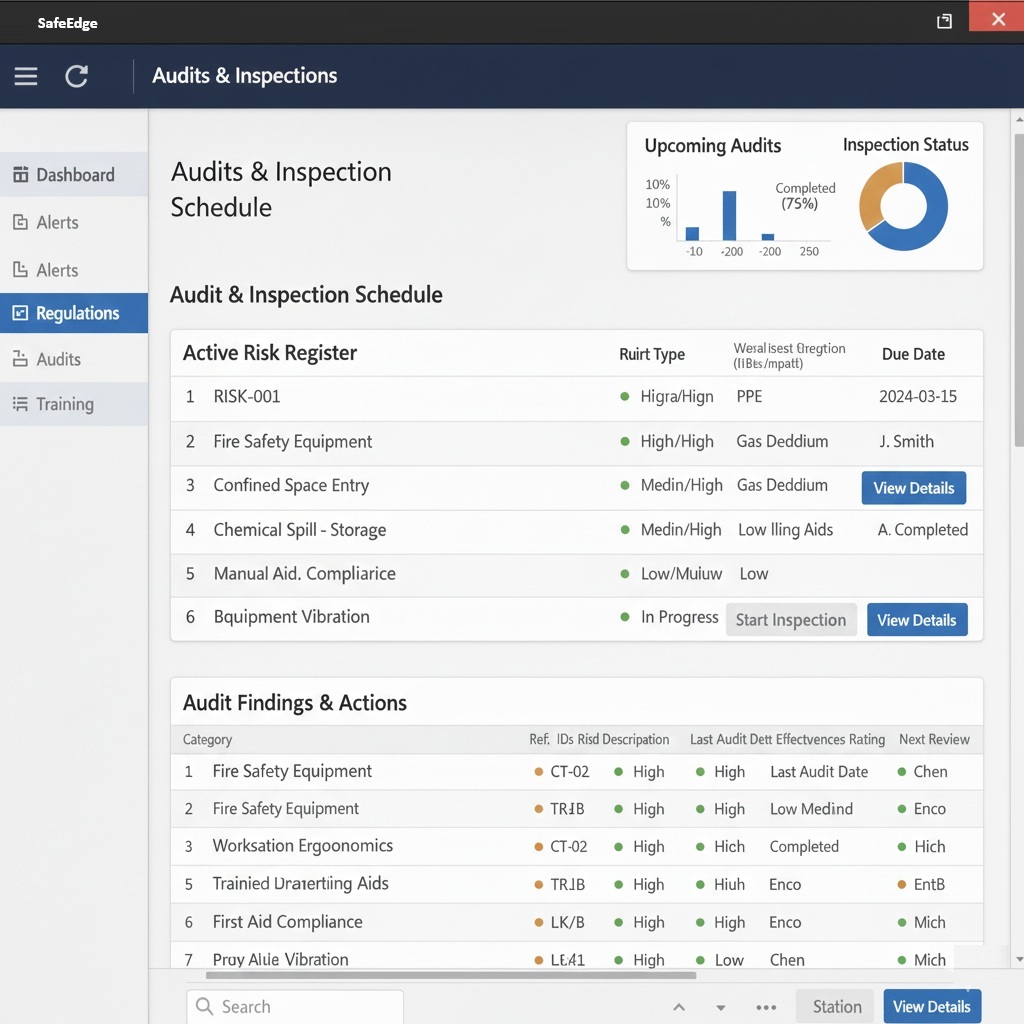
8. Audits & Inspections

  • Digital Checklists: Drag-and-drop builders for site inspections, equipment maintenance, and PPE checks.
  • Offline Functionality: Ability for field workers to conduct audits without an internet connection, syncing once back online.
  • Scheduled Inspections: Automated calendar reminders for recurring weekly, monthly, or annual safety audits.
  • Scoring & Benchmarking: Compare safety performance across different sites or departments using standardized scores.

9. Training & Compliance

  • Learning Management System (LMS): Host and track safety training videos, quizzes, and inductions.
  • Certification Tracking: Automated alerts for expiring licenses (e.g., forklift certification, first aid, OSHA 30).
  • Regulatory Register: A central database of local and international laws (OSHA, HSE, ISO 45001) that applies to your business.
  • Document Control: Central hub for Safety Data Sheets (SDS), SOPs, and company policies with version history.

10. Occupational Health & Wellness

  • Injury & Claims Management: Track worker compensation claims and return-to-work programs.
  • Health Surveillance: Manage medical check-ups and monitor exposure to noise, chemicals, or vibration.
  • Ergonomic Assessments: Tools to evaluate and improve workstation setups for office or industrial staff.
  • Drug & Alcohol Testing: Logs for random or post-incident substance testing.

11. Operations & Asset Management

  • Contractor Management: Prequalify vendors, track their insurance, and manage their site-specific inductions.
  • Equipment Register: Track maintenance logs for heavy machinery, ladders, and fire extinguishers.
  • Chemical Management (GHS): Digital library for Safety Data Sheets (SDS) and tools for labeling hazardous materials.
  • Lone Worker Monitoring: GPS-based check-ins and "panic buttons" for staff working in remote or dangerous areas.

12. Reporting & Analytics

  • Real-time Dashboards: Visual heatmaps and charts showing safety performance at a glance.
  • Lagging vs. Leading Indicators: Track historical data (injury rates) and proactive data (completed inspections).
  • Automated Regulatory Reports: One-click generation of OSHA 300 logs or annual EHS summaries.
  • AI Insights: Predictive analytics that flag departments or sites at high risk for a future incident based on current data trends.

Ready to transform Health & Safety Management?

Contact us today for a free consultation. Our experts will analyze your needs and provide a tailored strategy to help you find the perfect solution for your organization.

Contact Us Now